

Don’t Let Digestive Issues Ruin the Holidays

November 25th, 2008

With the start of the holiday season just a few days away, some people may find that their stomachs may not exactly be in the holiday spirit. Factors like traveling to visit family and friends and/or a change eating habits can wreak havoc on your stomach.

According to a recent Harris Interactive survey*, 63 percent of respondents reported traveler’s diarrhea as a problem they’ve had during travel, even domestically.

One way to take care of holiday digestive issues is to keep your gastrointestinal tract fortified with beneficial yeast and bacteria cells by taking probiotics, like Saccharomyces boulardii, Lactobacillus acidophilusLactobacillus casei, Lactobacillus GG and Bifidobacteria.

To ensure you’re getting enough probiotic cells – about 1 billion live microorganisms – to really make an impact on your gastrointestinal health, you should opt for a supplement instead of a probiotic food.

Probiotic foods typically cannot sustain a number of microorganisms that high, so the average person would have to double or triple their food intake. For example, according to Lynne McFarland, Ph.D., author of The Power of Probiotics, it would take eating anywhere from five to 10 cartons of yogurt to equal the number of live microorganisms in one daily dose of most probiotic supplements.

Many probiotic supplements are now sold in travel-convenient packaging and without the need of refrigeration, making it easy for you to bring your probiotics with you wherever you go.

*Survey Methodology: Harris Interactive® fielded the study on behalf of Florastor® from February 21-25, 2008, via its QuickQuery online omnibus service, interviewing a nationwide sample of 2,602 U.S. adults aged 18 years and older.

New Study Finds Repeated Antibiotic Use May Harm Beneficial Gut Bacteria

November 20th, 2008

We’ve written about the effects that antibiotic treatment can have on our stomachs, like antibiotic-associated diarrhea, in past blog posts.

Now, a study published in the PLoS Biology this week found that “antibiotic treatment, especially when prolonged or repeated, may have a negative impact on beneficial bacteria that live in the gut.” 

Researchers from Stanford University, the Josephine Bay Paul Center for Comparative Molecular Biology and Evolution and the Veterans Affairs Palo Alto Health Care System studied ciprofloxacin, an antibiotic used to treat bacterial infections.

The editors at HealthDay wrote about this new study, and you can read their article here: http://www.healthday.com/Article.asp?AID=621405.

You can also read the study’s research article here: http://biology.plosjournals.org/perlserv/?request=get-document&doi=10.1371/journal.pbio.0060280.


When Yeast is Good

November 19th, 2008

Yeast. It’s a word that makes many women cringe.

And it comes as no surprise, Patricia Raymond, MD, board-certified gastroenterologist, author and assistant professor at Eastern Virginia Medical School. For many women, the thought of yeast conjures up bad thoughts of yeast infections.

“Before I was a gastroenterologist, I was a physician,” says Dr. Raymond. “Before I was a physician, I was a medical student. Before I was a medical student, I was a regular woman and frankly, yeast was not my friend. Anything that causes you to lose your self-confidence, lowers your self-image and destroys your sex life is not a friend.”

What many people don’t know is that there are different varieties of yeast. Candida albicans is the yeast infection-causing yeast that many women have learned to hate, while Saccharomyces is a beneficial yeast that can be broken down into different types.

For example, Saccharomyces cerevisiae is a brewer’s yeast that’s used in making wine, bread and beer, while Saccharomyces boulardii is a powerful probiotic that’s been clinically shown to maintain and restore the natural flora in our small and large intestines.

“For those women who have never had a positive relationship with yeast, fear not – pharmaceutical yeast doesn’t equal yeast infection,” Dr. Raymond reports. “In the last several years, there have been more and more studies – clinical trials on humans – using yeast, using specifically Saccharomyces boulardii, and, as a practicing gastroenterologist, I have come to the conclusion that yeast is, in fact, good.”

Here are some instances where yeast is your friend:

  • To prevent antibiotic-associated diarrhea (AAD): One in five people on antibiotics will develop AAD, and yeast has a natural resistance to antibiotics. “Antibiotics destroy bacterial infections, but they also destroy the gut’s natural beneficial microorganisms along with it, resulting in diarrhea that can be quite severe,” says Dr. Raymond. “The good news is that S. boulardii, when taken along with the course of antibiotics, has been clinically shown to control AAD by increasing the number of protective [good] microorganisms in the intestines, so the ‘bad’ microorganisms can’t take over.” 
  • To manage traveler’s diarrhea (TD): People in other parts of the world have been using probiotics to combat travelers’ diarrhea for decades, and it is a great way for traveling Americans to keep their intestinal tracts healthier on the road, too. To help ward off invading pathogenic bacteria (from water, food, etc.) that can cause TD or other intestinal upset, you might want take S. boulardii for several days before the trip and during the entire trip. “It’s a great alternative to anti-diarrheals that simply stop up the symptoms, but don’t address the cause,” Dr. Raymond says. 
  • To treat the recurrence of C. diff: A recent subject of heightened concern in the medical community, intestinal infections resulting from the potentially deadly Clostridium difficile (C. diff) bacteria have a high rate of recurrence. Patients often suffer from a relapse when the C. diff spores “hatch” weeks or even months later. Scientific analysis concludes that S. boulardii, combined with the use of powerful antibiotics, including metronidazole or vancomycin, can cut the future recurrence of C. diff-associated disease by half.  “Because S. boulardii is a yeast and not a bacteria, it is not killed by the strong antibiotics that are being used to kill the C. diff bacteria, so it survives in the digestive tract,” says Dr. Raymond

Break the Loperamide Cycle – A Gentler Alternative to Diarrhea Relief

November 11th, 2008

When it comes to treating diarrhea, most people reach for products like Imodium® and Pepto-Bismol® that contain loperamide.

Loperamide, a common active ingredient in many over-the-counter anti-diarrheal medications, stops troublesome diarrhea by slowing down the speed of fluids moving through the bowels.

This allows more time for water and electrolytes to be reabsorbed from the gut back into the body, and results in firmer stools that are passed less frequently,” says Patricia Raymond, M.D., noted board-certified gastroenterologist, author and assistant professor at Eastern Virginia Medical School.

Loperamide may seem like the way to go when treating diarrhea, but side effects like bloating and constipation can occur. A more natural way to treat diarrhea is with probiotics.

“Probiotics are a great alternative to anti-diarrheals, because anti-diarrheals simply ‘stop up’ the symptoms, but don’t actually address the cause,” Dr. Raymond says. “Using anti-diarrheals can actually stop up the flow of the harmful microorganism that your body is trying to eject when you diarrhea.”

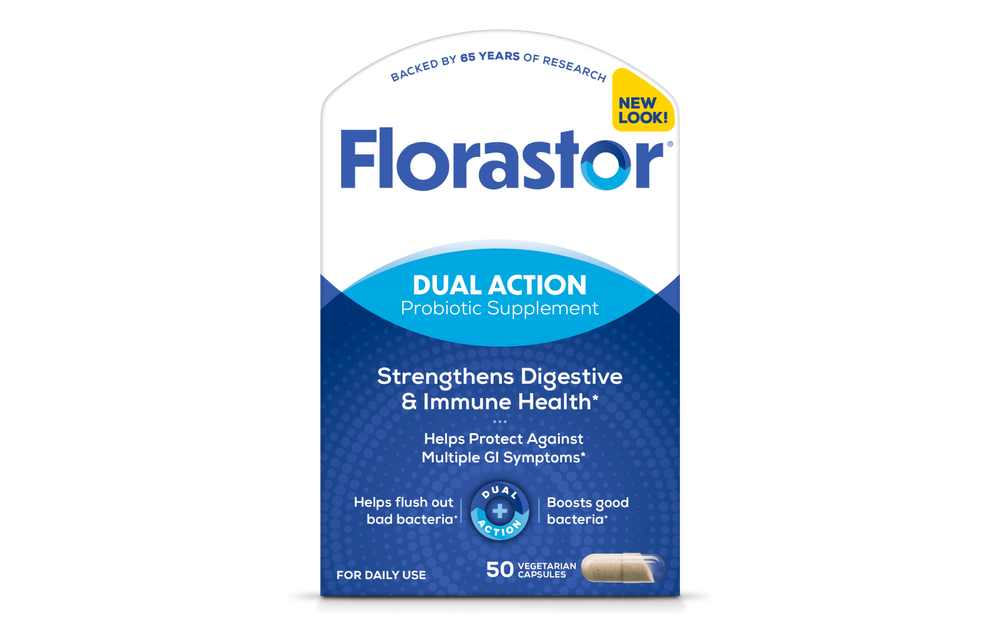
As probiotics are becoming more mainstream, consumers are seeing them on the shelves of their local drugstores and pharmacies. For example, Florastor, a probiotic containing Saccharomyces boulardii, is now being stocked in the anti-diarrheal aisle in all of Duane Reade’s 250 stores. Other probiotics, like Lactobacillus acidophilus, Lactobacillus casei, Lactobacillus GG and Bifidobacteria, are available at retailers like CVS.

Some popular probiotic brands also have children’s versions in powder form (which can be mixed with soft foods like applesauce) to help treat pediatric diarrhea, a much safer alternative than loperamide, which is not recommended for treating diarrhea in young children because of potentially serious side effects, according to a May 2007 article in Pediatric News. The article, based on a meta-analysis including data from more than 1,700 children, warns that “the complications from loperamide outweigh any potential benefits for the treatment of diarrhea in children younger than 3 years.”

The meta-analysis found that 10 percent of children who received loperamide reported experiencing an adverse effect (ranging from sleepiness and abdominal distentionileus to death), compared with only 2 percent of the children who received a placebo.

Probiotics and Traveler’s Diarrhea – What You Should Know Before You Go

October 30th, 2008

At some point during our travels, more than half of us have suffered from a bout of travelers’ diarrhea. According to the Centers for Disease Control and Prevention (CDC), travelers’ diarrhea (TD) is the most common illness affecting travelers, with 20%-50% of international travelers, or an estimated 10 million persons, developing this diarrhea. The onset of TD usually occurs within the first week of travel, but may occur at any time while traveling, and even after returning home.

What most people don’t know is that you can help manage travelers’ diarrhea by taking probiotics as a precautionary measure while on the road (whether near or abroad). A recent Harris Interactive® survey found that only one percent of U.S. travelers say they pack probiotics on their trips, while one in four (25 percent) U.S. travelers packs an anti-diarrheal medication.  The survey also revealed that more than three quarters of adults (77 percent) say they have never heard that taking probiotics before a trip can strengthen intestinal defenses.

“Many people in other parts of the world, particularly Europeans, are firm believers in using probiotics to ward off travelers’ diarrhea, but Americans are just catching on to the concept of probiotics in general,” says Patricia Raymond, M.D., noted board-certified gastroenterologist, author and assistant professor at Eastern Virginia Medical School. “It’s not surprising that many Americans don’t think of them for prevention of this disheartening vacation disruption.”

Of the probiotics available today, there has been a scientific study showing a reduction in travelers’ diarrhea with a Saccharomyces species.

According to Dr. Raymond, travelers should consider taking probiotics for a few days before the trip, during the trip and after the trip ends to help ward off the invading pathogenic bacteria (from water, food, etc.) that can cause TD. “It’s a great alternative to anti-diarrheals that simply stop up the symptoms, but don’t address the cause or let the toxins out of your system,” she says. 

*Survey Methodology: Harris Interactive® fielded the study on behalf of Florastor® from February 21-25, 2008, via its QuickQuery online omnibus service, interviewing a nationwide sample of 2,602 U.S. adults aged 18 years and older.

Strengthen Your Gut When Taking Antibiotics

October 16th, 2008

October marks the start of cold and flu season, and, with that, bacterial infections such as strep throat, etc., that require antibiotics. So it’s fitting that this month is designated as National “Talk About Prescriptions” Month by the National Council on Patient Information and Education.

Yet, while antibiotics are needed to treat bacterial illnesses, they often come with intestinal side effects for many people. A Harris Interactive poll(1) among adult Americans aged 18 and older found that one in five people taking antibiotics will end up with antibiotic-associated diarrhea (AAD) – a severe, often debilitating diarrhea, which can lead to dehydration.

If you’re an AAD sufferer, there are things you can do to help protect your gut. First, only take antibiotics when absolutely necessary. According to the Food & Drug Administration, about half of the 100 million antibiotic prescriptions issued by U.S. physicians are unnecessary; antibiotics are good for bacterial infections only, and are completely ineffective against viruses (such as the common cold or, even, the flu).

Second, if you require a course of antibiotics, take a probiotic at the same time.  According to a report in Consumer Reports on Health, taking probiotics during antibiotic treatment can reduce the incidence of AAD by up to 60 percent.

One probiotic in particular, Saccharomyces boulardii, or S. boulardii, has been clinically shown to help treat and prevent AAD by keeping the intestines colonized with protective flora, stopping harmful bacteria from taking over and neutralizing toxins.  In the book The Power of Probiotics (Haworth Press 2007), researchers Lynne McFarland, Ph.D. and Gary Elmer, Ph.D., report that “the strongest evidence for the role of living organisms in the treatment of AAD comes from randomized, controlled clinical trials involving the probiotic yeast S. boulardii.”(2)

Other probiotics like Lactobacillus acidophilus, Lactobacillus casei, Lactobacillus GG and Bifidobacteria have also been used to treat AAD, however, these are bacterial-based probiotics and can also be killed off by the antibiotics.  Doctors recommend the yeast-based S. boulardii, instead, which, as a yeast, won’t be killed off by the antibiotics.

(1)This survey was conducted online within the United States by Harris Interactive via its QuickQuerySM online omnibus service on behalf of Florastor® between December 15 to 19, 2006, among 2,313 adults (aged 18 and over). Figures for region, age within gender, education, household income and race/ethnicity were weighted where necessary to bring them into line with their actual proportions in the population. Propensity score weighting was also used to adjust for respondents’ propensity to be online.
(2) The Power of Probiotics: Improving Your Health With Beneficial Microbes, by Gary W. Elmer, Ph.D., Lynne V. McFarland, Ph.D. and Marc McFarland (Haworth Press 2007), pg. 79.

Patients at Long-Term Care Facilities and Hospitals Could Benefit from Probiotics

October 8th, 2008

Hospitals and long-term care facilities appear to be the major reservoirs for intestinal superbugs like the Clostridium difficile (C. diff) pathogen, among others. C. diff-associated disease (CDAD) is facing heightened concern in the medical community since the release of a  report by the federal Agency for Healthcare Research and Quality, which found that 301,200 people became infected with C. diff in 2005 and 28,600 people died from the infection that year.

CDAD infections have been on the rise for more than a decade. The number of CDAD cases rose 74 percent from 1993 to 2000, and overall, more than two million hospital patients contracted the infection between 1993 and 2005, the report shows.  Betsy McCaughey, head of the Committee to Reduce Infection Deaths calls C. diff the “next major germ threat.”  In light of this, the Association for Professionals in Infection Control recently conducted a prevalence study, much like what was done for the MRSA bacteria, in order to gain a better understanding of C. diff.

But, according to Lynne V. McFarland, Ph.D., a University of Washington medicinal chemistry adjunct associate professor and epidemiologist, there are things you can do to help protect your health during your stay.   If you’re going to be in a long-term care facility or hospital for more than a few days, Dr. McFarland recommends taking probiotics, because the risk of acquiring a healthcare-associated infection starts to go up after 72 hours of a stay.  She suggests taking probiotics a few days before you’re admitted to give the yeast or bacteria cells a chance to “set up housekeeping” in the gut.

To continue to protect yourself, Dr. McFarland also suggests taking probiotics throughout the duration of your hospital stay and for two to three weeks after being discharged if you were given antibiotics. This will allow your gut to stay colonized with beneficial yeast or bacteria cells.

Probiotic Foods…Can They Always Pack the Punch?

October 1st, 2008

From the morning cereal to your mid-afternoon yogurt snack, probiotic-fortified foods promising a healthier digestive tract are everywhere these days. While foods with added probiotics may help keep the gut in check, the experts say that there are times when it is best just to take a supplement in order to get the proper amount of good micro-organisms to be effective.

“If you’re someone who simply suffers from occasional intestinal discomfort or constipation, then a few probiotic yogurts may do the trick,” advises Patricia Raymond, M.D., board-certified gastroenterologist, author and assistant professor at Eastern Virginia Media School.  “However, if you suffer from more serious or chronic gastroenterological conditions, including antibiotic-associated diarrhea or inflammatory bowel diseases, such as ulcerative colitis, a probiotic supplement may be more appropriate, as more serious conditions require a probiotic dosage of at least one billion live micro-organisms in order to make a true impact on intestinal health.”

Probiotic foods typically cannot sustain a number of micro-organisms that high, so the average person would have to double or triple their food intake. For example, according to Lynne McFarland, Ph.D., author of The Power of Probiotics, it would take anywhere from five to 10 cartons of yogurt to equal the number of live micro-organisms in one daily dose of most probiotic supplements.

Probiotic Claims: Sorting Through the Clutter

September 11th, 2008

As probiotics are becoming more commonplace, the health claims are almost endless.   But how much is real and how much is marketing hype?

A major probiotic yogurt’s claims came into question in a January 2008 proposed class action lawsuit that accused the manufacturer of false advertising to convince consumers to pay more for yogurt containing probiotic bacteria.  The proposed suit said that studies failed to support the manufacturer’s health benefits claims.  So does this mean that all probiotic claims can be suspect?  How can you sort the “scientifically sound” from the “snake oil?”

Lynne V. McFarland, Ph.D., a University of Washington medicinal chemistry adjunct associate professor and epidemiologist, recently collaborated with colleagues including Gary Elmer, Ph.D., also a professor of medicinal chemistry at the University of Washington, to write a consumer-friendly guidebook called The Power of Probiotics.  The book uses the experts’ combined decades of research and expertise to explain probiotics, their uses, their attributes and their fallacies, and also use sound scientifically proven research to demonstrate which claims are worthwhile, which are suspect and how a consumer can tell which is which.

To cut through the claims clutter, Dr. McFarland also suggests the following tips:

  • Match the type of probiotic to the type of health problem you’re experiencing.
  • Consider the source of the product.  You can have more confidence buying from a store that has an in-store pharmacist that reviews products or from your local pharmacy.
  • Make sure the label includes the types of micro-organisms in the products, how many live micro-organisms are in a daily dose an expiration date, and if it needs refrigeration or not.
  • Research whether or not there is evidence that the product works for the type of problem you are having.

Wondering where to find reliable research?  Dr. McFarland suggests Web sites, such as PubMed, a literature search engine run by the National Institute of Medicine.  Enter the main ingredient in the probiotic product you’re interested in (such as Saccharomyces boulardii, or Lactobacillus GG).  You should see a listing of scientific, peer-reviewed articles.  If the probiotic you’re researching doesn’t come up on this Web site, you may want to examine the claims more closely.

Packing Probiotics? Most Americans Don’t Think Of It

August 26th, 2008

Did you know that almost half of U.S. adults (44 percent) say they have been affected by a travel-related illness at some point in their lives?

The most common on-the-road malady, according to a recent Harris Interactive poll among adult Americans aged 18 and older, is traveler’s diarrhea (nearly two-thirds surveyed – 63% experienced this), including both domestic and foreign travel. Certain probiotics, such as those containing Saccharomyces boulardii, while used by people in many countries around the world for managing traveler’s diarrhea (and diarrhea in general), are yet to be popular for U.S. travelers — only one percent of U.S. travelers reported packing probiotics in this Harris survey.

The survey also found that:

  • While 16 percent of U.S. adults say they try to avoid vacation travel to places where travel-related illnesses are common, 44 percent indicate they don’t even think about potential illnesses when planning a vacation. Additionally:
  • 23 percent say that they don’t avoid vacation destinations associated with travel-related illness, but they do bring along medications in case they do come down with something
  • Men are more likely than women to say they try to avoid vacation travel to places where travel-related illnesses are common (18 percent vs. 14 percent, respectively)
  • 5 percent said that they themselves would go to a desirable vacation spot that is associated with travel-related illnesses, but won’t take their children
  • More than three quarters (78 percent) indicate they usually “stay within the U.S.” when planning a vacation
  • More than a third of U.S. adults (37 percent) indicate they like to seek out new foods they’ve never had before when they travel:
  • 35 percent say they try to immerse themselves in the local culture by eating and drinking the local specialties; men are more likely to feel this way than women (40 percent vs. 30 percent)
  • 35 percent say they try to avoid ingesting local water when traveling
  • One in five (20 percent) say they are “very careful” about what they eat and drink because they are afraid of getting sick; the same percentage also say they are “not”
*Survey Methodology: Harris Interactive® fielded the study on behalf of Florastor® from February 21-25, 2008 via its QuickQuerySM online omnibus service, interviewing a nationwide sample of 2,602 U.S. adults aged 18 years and older.